The Ideal Alliance
Curriculum
INTENT
Our curriculum seeks to reflect the diversity of our society and celebrates a rich multi-cultural history of our world.
All of our activities are carefully planned around the Early Years Foundation Stage (EYFS) framework and the needs of our children, we seek to provide:
- quality and consistency so that all children make good progress
- a secure foundation where learning opportunities are planned around the needs and interests of the children
- a partnership between practitioners, parents and/or carers
- equality of opportunity where every child is included and supported
The EYFS comprises of seven areas of learning and development which shape our curriculum. All seven areas are inter-connected and important for children's development. Three areas in particular are most crucial for igniting children's curiosity and enthusiasm for learning. We aim to develop learning through these three prime areas:
- communication and language
- physical development
- personal, social and emotional development
The prime areas are supported by the further four areas of learning:
- literacy
- mathematics
- understanding the world
- expressive arts and design.
We have created a responsive curriculum that is ambitious and designed to give all children, particularly the most disadvantaged, the knowledge and cultural capital they need to succeed in life. Our curriculum is coherently planned and sequenced. It builds on what children know and can do, and helps them to be prepared for starting school. We are ambitious for all children and plan access strategies for those who need additional support.
IMPLEMENTATION
We have carefully considered how to maximise learning opportunities so our pupils will remember and make lasting connections between the steps they are taught over time. We want our setting to make our pupils tingle with expectation and create awe and wonder through interactive displays, activities of high quality, first hand experiences and a diverse indoor and outdoor environment. We carefully consider the language we model and use with the children and we are child centred when planning and designing learning experiences. We model the values we expect our children to use at all times to create a culture of respect and patience in the setting.
Our staff understand how children learn and offer opportunities to develop language skills through scaffolded discussion, modelling the correct pronunciation of words and sentences. They read stories in exciting ways to engage children and help them to make strong connections with their existing knowledge.
We use assessment to ensure we carefully plan learning opportunities which challenge and teach our children through a creative environment that supports our ambitious, coherently planned and sequenced curriculum. Our regular dialogue with parents helps us to work together to ensure learning opportunities can be extended at home.
IMPACT - what difference does it make?
As a result of what we do, our children thrive and develop detailed knowledge and skills across all seven areas of learning. They can:
- share and take turns in their play, understanding the needs of others, and how to build relationships
- use simple sentences to communicate their feelings and understanding of the world and listen carefully to others
- recognise and write some letters and sounds, beginning to blend and segment simple CVC words aurally and develop a love of books
- recognise and enjoy maths concepts related to their age and engage in games using this knowledge
- walk, run, climb and ride and move in different ways to express themselves
- enter the Foundation stage ready for the next part of their learning
Our Curriculum
Our staff have high expectations of all children. We have an ambitious curriculum that provides a wide range of experiences and activities to support children's development and learning. We closely observe children and follow their interests whilst introducing them to new concepts, skills and vocabulary to enable them to access the full breadth and depth of the curriculum.
Staff engage in play with children to challenge and inspire their creativity, curiosity and interests and to develop their enthusiasm to learn and discover more.
Our Curriculum Goals
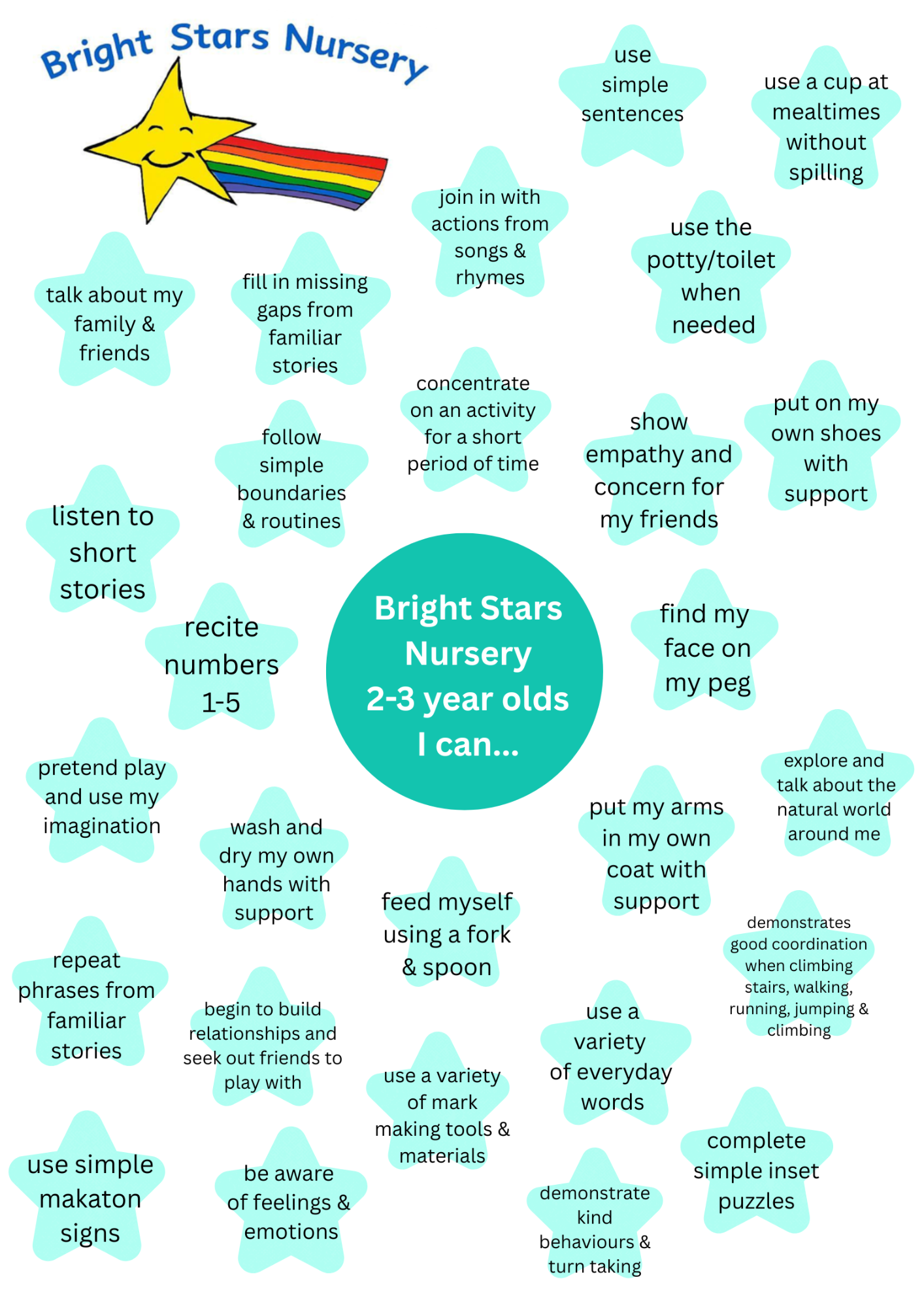
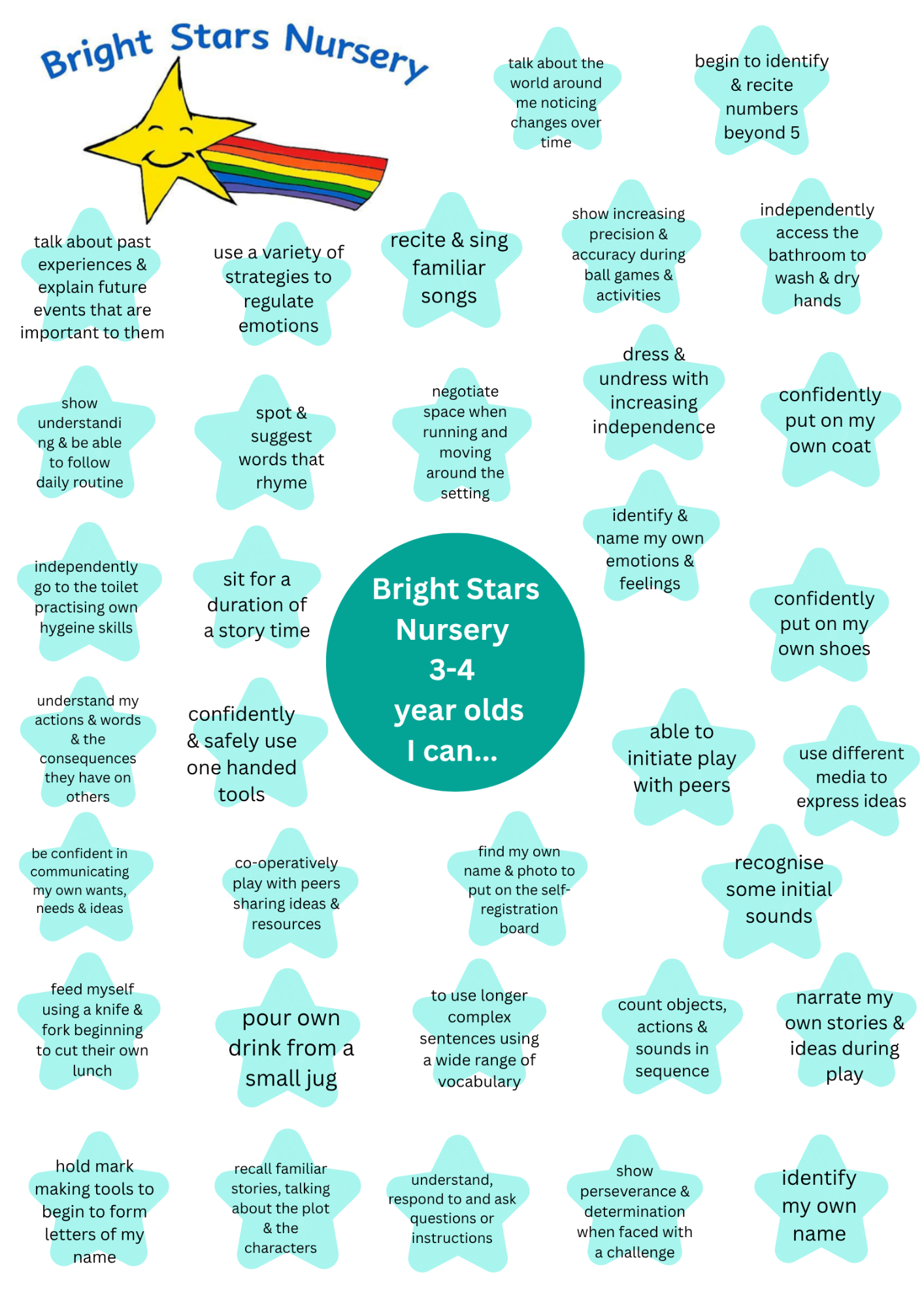
Our curriculum goals form the focus of what we want all children to be able to know or do by the time they leave the setting. They have been developed through professional discussion, observations of children's play and learning, and conversations with children and parents about what is important to them. The goals provide consistency to the focus of children's learning throughout the school.
We understand that each child is unique and will learn and develop in different ways and at different rates and our play-based curriculum is designed to help all children thrive and to enjoy their learning during their time with us.
For each curriculum goal there is a corresponding 'progression pathway' that outlines key developmental milestones and what we will do to support learning in each area.